In the first four decades after independence, i.e., from the 1950s to the 1980s, the Indian economy grew at a sluggish pace of approximately 3.50% to 4.00%. India adopted a state-directed, centrally planned economic model during this period. The fact that Jawaharlal Nehru, our first prime minister, was a socialist with a left-leaning outlook is well known. His idea of a developing country was based on a planned economy that ignored market dynamics and involved government intervention in business and international trade. This led to excessive regulation resulting in corruption and inefficiency, which slowed GDP growth.
Wednesday, August 20, 2025
THE HINDU RATE OF GROWTH 2.0
Wednesday, May 1, 2024
THE WELL-WISHER
Satyen was a conscientious employee and had spent close to a quarter century in a private bank. A devoted family man, he found solace in his cosy two-bedroom flat, sharing life's journey with his wife and adult children. Life, with its inevitable ebbs and flows, tested him as it did everyone else, but Satyen firmly believed that resilience in the face of adversity was the key to happiness.
Meanwhile, Amit, Satyen's son, carved his path in the financial world. Armed with degree in Statistics and Economics and a post-graduate degree in Business Management, he navigated the realm of mutual funds as an analyst with an asset management company. Collaborating closely with Tushar, his affable colleague from marketing, they forged a bond beyond the confines of the office, nurturing dreams of entrepreneurial success. Their friendship blossomed over shared meals, movie nights, and spirited debates during IPL matches.
And this is when, given the bond that had developed between them, they decided to venture out on their own. They reasoned that with Amit's analytical skills and Tushar's marketing prowess, they would start a financial advisory business and if they were able to scale up operations, then the ultimate aim was to launch an equity fund of their own.
Amit sounded Satyen about their plans to start a new venture and was pleasantly surprised that Satyen, though having no entrepreneurial experience himself, was enthusiastic about it. Amit was probably not aware that deep within Satyen too had wanted to venture out on his own. But, probably lacking the risk appetite or not wanting to rock a steady boat, he never worked on it.
As Amit and Tushar delved deeper into planning their venture, resigning from their current jobs to focus wholeheartedly on their newfound endeavour became inevitable. Striking a balance between professional commitments at work and entrepreneurial aspirations became increasingly taxing, prompting them to take the leap of faith. They put in their papers a few days apart, hoping the company's management would not read too much into their departure.
That Satyen was enthusiastic about this new venture, as Amit realised later, was an understatement. At a family get-together, he spoke to close relatives freely about Amit's new venture. Not only did he speak about Amit's plans but also about how the mutual fund industry was poised to grow adding that presently people preferred investing their savings in Equities and Mutual Funds rather than parking them in safe havens such as Fixed Deposits, Government Bonds and Debentures.
The responses that Satyen received were not entirely to his expectations. Whilst his siblings and their spouses were polite and unhesitatingly wished Amit "All the very best", there was a 'but' in their tone. They spoke of exercising caution and about the high failure rate in start-ups. He was also queried whether Amit had a well-paying job, and if so, why was he throwing it away. Some even inquired about their source of funds for the office rentals, salaries and administrative expenses, and if Satyen had the financial means to back Amit if required. On reflection, Satyen felt that his extended family did not share his excitement about Amit's leap of faith and his aspirations. He thought it best not to talk about it socially and let Amit's work speak for itself.
Amit's notice period was coming to an end, and one evening, leaving office early he decided to visit his father at work. As they chatted over a cuppa in Satyen's cabin the Vice President of the Bank, Mr. Shenoy, passing by, taking notice of Amit, stepped in. "How are you, young man? So, what have you been up to lately?" he asked in his usual affable voice. The VP too, was with the bank for several years and knew family members of his close associates well, having interacted with them at dinners and get-togethers organised by the bank.
Amit, hesitant at first, let him know of his plan to embark on his journey in the world of finance. The VP looked at him enquiringly, nodded his head, then invited both of them to his cabin.
As they seated themselves on the sofa in his spacious cabin, the VP enquired of Amit how he planned to go about his new venture. Having heard Amit patiently, the VP now focussed his attention on his partner, Tushar. He asked Amit what kind of business Tushar achieved monthly and whether he was able to meet company targets. Having satisfied himself that Tushar had good connections and the drive to scale up the business, he turned to the administrative essentials. He enquired about the proposed location of their new office, what type of staff they proposed to have, and finally about their finances. Along the way, he also offered his views and helpful tips that he had acquired over the years working in the world of finance whilst emphasizing the trials and tribulations of entrepreneurship. But, he then added, "this is how all great businesses are built". The rock-solid foundation of business is the founders' strong sense of self-belief, a can-do attitude mixed with a large dose of perseverance.
The VP then fell silent letting Amit soak in all that he had said. After a few moments of silence, he spoke again. "Amit, I am proud that you have taken the bold step of venturing out on your own. If you require any assistance which is within my means to provide, I would be very happy to help. Good luck, my boy!"
As the father and son duo left the Vice President's office, Satyen could not but contemplate the contrast between the response of his relatives and that of his boss to the news of Amit's new business venture.
Armed with newfound encouragement and a mentor's blessing, Amit embarked on his entrepreneurial odyssey with renewed vigour, and the knowledge that now not only did he have his father's unwavering support but also that of a true well-wisher on whom he could count for guidance and invaluable insights.
Saturday, February 3, 2024
THE INTERVIEW
It was “Open Interview Week” and
the university campus was filled with excitement as industry leaders sought
outstanding talent with promising offers. Though the final exams were two
months away, clearing them was deemed a mere formality for this prestigious
institution attracted the brightest minds.
Tuesday, January 23, 2024
Laughing Through Surnames: A Parsi Comedy of Suffixes
As Bombayites, or now Mumbaikars,
we live amongst the largest congregation of Parsis anywhere in the world. And,
most of us must have noticed, with some amusement, the funny surnames some of
them bear. Probably, the first such surname that comes to mind is
Sodawaterwalla. Well, it is a no-brainer that it was given to a Parsi gent in
the carbonated water business. Much before colas were invented, we had
Raspberry, Orange, Lemon and Pineapple flavoured carbonated drinks. This
surname was fictionally elongated to Sodawaterbottleopenerwalla by Adi Marzban
in his popularly funny Parsi Nataks.
The next one sounds a bit
embarrassing – Boywalla. Whilst in today’s
lingo it sounds quite Gay, it has nothing to do with one’s sexual preferences.
This surname comes from the Boi ritual which involves feeding the sacred fire
in a fire temple with fragrance and fuel. And the persons who performed it were
referred to as Boiwala or Boywalla.
A
Ginwalla would probably be the lucky bloke dealing in liquor. Sadly, no. On the
contrary, those who were referred to as such were textile mill employees in
charge of the Ginning machines. Similarly, the highly erotic-sounding Screwalla
surname was suffixed to those whose job was quite boring – overseeing loads of
fluffy cotton pressed tightly into bales by a screw-operated mechanism. And, while
Daruwalla indicates liquor trade, the word Daru was also used to refer to
gunpowder.
Fanibanda
may tickle your funny bone but it refers to Parsis from a place in Hubli
(Karnataka) called Faniband. Similarly, Dhondys were residents of Daund near
Pune. While Parsis are known anglophiles and have anglicised surnames like
Cooper, Nicholson, Driver, Doctor, Engineer, etc., a few even had
European-sounding surnames like Petit, Sinor and Italia. Not that they have any
connection to France, Spain or Italy. Petit is the French equivalent of the
Parsi-Gujarati Nalla meaning short or small, whilst Sinor and Itala are
villages in Gujarat! Another village that has given a rather unpleasant-sounding
surname is Gharda, meaning old in Gujarati.
A lot
of Parsis made their money in the 18th, 19th and early 20th
centuries due to their business links with the British in India, though this
association was not confined to cities like Bombay, Calcutta, Surat and Madras.
Many Parsis travelled to, and later settled in, military cantonments at
Deolali, Nagar (Ahmednagar), Belguam, Poona and called themselves Deolaliwalla,
Nagarwalla, Belgaumwalla and the most famous of all since Covid, Poonawalla.
And from one such cantonment in Karachi comes the story of a particularly
derogatory but laughable surname. A Parsi contractor desperate to win a
contract for military supplies adopted such patronising behaviour towards a
particular British officer in charge of procurement, that the hassled official
told the contractor that he would consider his proposal if he changed his
surname and the name of his company to Bumsuckerwalla! Evidently, the Parsi
complied!!
And
finally, when it comes to the most famous Parsi surname of all, TATA, which is
associated with their fair treatment of employees, their commitment to the
nation, and winning the trust of its customers in India and abroad, one would
be surprised to know that it is a corruption of the word Tartar, meaning hot as
in hot-tempered, referring to an ancestor of Jamsetji who, so it seems, was
quite irritable!
PS: I was
inspired to write this piece after attending a talk on Parsi surnames by Kaevan
Umrigar at Khaki Labs in Fort, Mumbai. Burjor Daboo’s compilation of Parsi
surnames on Zoroastrians.net has also been a point of reference. The image is from Parsikhabar.net
Saturday, October 21, 2023
The Hopeful Brides
As the industrial revolution gained momentum in Europe during the 19th century, India became an important source of raw materials that were exported from the country. In turn, the ships brought back finished products to be sold here. But, in the 1830s, another 'cargo' came on board – White Memsahibs. With the advent of the steamer, the travel time between Britain and India shortened to about a month, making the journey less exhausting, thus prompting many young English girls of marriageable age to seek their fortune and a life of privilege in a "mystic and exotic" land.
Such was the annual influx of hopeful girls, especially during the winter months, that by the 1850s and 60s, incoming passenger ships were referred to as the 'Fishing Fleet'. Whilst many of these young hopefuls were successful in 'fishing' suitable and well-provided grooms, some, sadly, had to return home unmarried and were often derisively referred to as the 'Returned Empties'.
So, what did these maidens desire? Dashing young men, of course. But not necessarily. It was equally important for them to seek the comforts of life offered here and improve their social standing by mingling in privileged circles. Many of these girls came from ordinary backgrounds and could not afford the conveniences and social standing that English women enjoyed in British colonial India. Traditionally, civil servants were prized catches, often considered a marital lottery. They were also known as 'Three hundred a year dead or alive men' as a newly appointed civil servant drew a salary of about 300 pounds annually. If he survived for a few years, his widow could expect to receive the same amount as a pension.
Travelling to India in the age of the steamer was a great leap over the sailing ships that plied in the first half of the 19th century. Southampton was usually the port of embarkation, and with stops at Gibraltar, Malta, Port Said and Aden, the steamers reached Bombay in about three weeks. Coming in the winter months was the best option as it gave the ladies time to acclimatise themselves to India's tropical heat and humidity. It was not uncommon for ladies to travel solo, though having a strong reference was necessary to avoid any potential inconveniences in a strange, new land. Travel was undoubtedly not light, with luggage consisting of bath essentials, medicines, books, reading lamps and a wardrobe to suit different occasions. Travel advisory books covering subjects from 'travelling in comfort to household management and cookery were popular picks. Books such as 'The English Bride in India' and 'A Handbook for Women in the Tropics' were written especially for 'arriving Memsahibs'. However, tips in the books notwithstanding, the ground reality was often demanding.
An English girl, sometimes as young as sixteen years, would need to adapt to life in the British Raj, which was very different from the one back home. It involved a significant cultural adjustment as well as adapting to India's hot and humid climate. Besides, the "marriage market" in British India was influenced by considerations of class and social status. Many eligible bachelors preferred marrying girls within the resident British community whose parents held positions of power and influence. It was a way to advance one's career and social status in the Raj.
There were a few cases of English women marrying 'Natives', but these unions often faced racial and cultural challenges, not to mention the conflict it caused in the colonial hierarchies of the time.
With the advent of the 20th century, social norms and attitudes towards marriage underwent a significant change in Britain. As more women gained economic independence they began to make their own choices regarding marriage, often opting for partners within their own country. The traditional practice of girls from Britain travelling to India to marry became less common.
Finally, with the end of the British Raj and the withdrawal of the British colonial administration and military personnel from India, there were negligible opportunities for English women to meet and marry British men in India.
And thus ended the journey of the hopeful Brides.
Footnote: English women here refers to women from Britain and Ireland.
Tuesday, May 31, 2022
DEVICES THAT MADE OUR LIFE EASY
The industrial revolution began in the late 18th century, but many of its practical benefits were available much later.
Tuesday, January 18, 2022
DUETS WITH THE SWAR SAMRAT
Wednesday, November 24, 2021
1970s - THE DOORDARSHAN DECADE
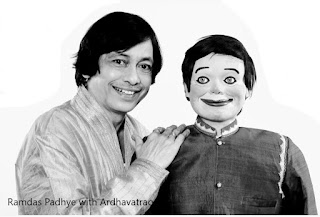
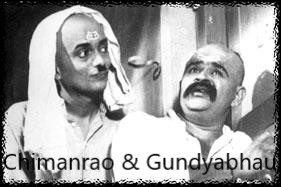
Despite all the shortcomings in the early days, TV became a popular source of entertainment. The telecast was a mix of educational, social and entertainment programmes with something for everyone in the family. For children, there was Magic Lamp in English, Kilbil in Marathi, Santakukdi in Gujarati and Khel Khilone anchored by the effervescent Manju Singh in Hindi. The children enjoyed quiz, arts & crafts, puppetry and ofcourse, the stories narrated on these shows. Besides these, there were English serials - Fireball XL5, Invisible Man, Man In A Suitcase, Count Of Monte Cristo, Sir Francis Drake, Here's Lucy, Charlie Chaplin, Nicholas Nickelby, Father Dear Father and the universally popular German games show, Tele-Match. Ventriloquist and puppeteer Ramdas Padhye added to the merriment with his 'friend-in-arms' Ardhvatrao in Meri Bhi Suno.
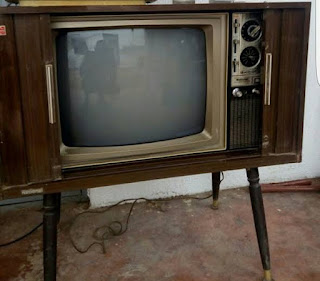
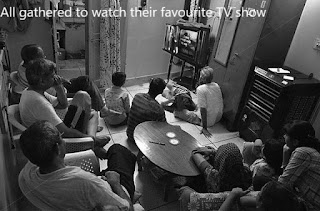
Cartoons such as Flintstones and those by the Films Division were also fun to watch. Stop Pull Chain, Skin in the Bin, Tree of Unity, etc., were produced by Films Division to spread a social message in a fun way. Though the quality of animation was below par as compared to Walt Disney cartoons, they did make their point. Chaya Geet, a medley of Hindi movie songs was telecast on Thursdays whilst the effervescent Tabassum conversed with Hindi film personalities in Phool Khile Hai Gulshan Gulshan on Fridays. Both these programs were aired at 9.10 pm. Saturday evenings were reserved for regional movies and plays, usually in Marathi and occasionally in other languages such as Gujarati and Sindhi. However, the most awaited program of the week was the Hindi movie on Sunday evening. Before the advent of the VCR, this was the only way one could watch a movie outside a theater. Such was the popularity of these programs that those who did not own a TV set would visit a neighbour, friend or relative to watch their favourite show. It was common to see many people huddled in the drawing rooms of those fortunate enough to own a TV set, especially on a Sunday evening to watch the Hindi movie.
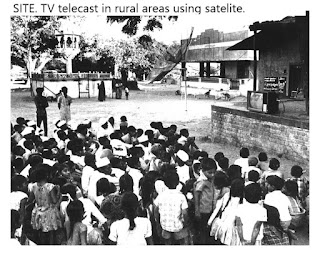
Besides entertainment, Doordarshan also had social responsibilities to fulfil. And two shows that did just that were Amchi Maati Amchi Maansa and Kamgar Vishwa. The first gave valuable farming-related inputs to farmers and the other took up labour-related issues. Many may not be aware that Doordarshan also launched Education Tv or E-Tv, a program aimed at students studying in Municipal and Government schools. It was telecast in the mornings and afternoons on weekdays. This project was a joint venture between ISRO & NASA and was known as Satelite Instructional Television Experiment or SITE. But probably the most remembered program must surely be "Aapan Yaannaa Pahilat Kaa?"! It showed pictures of missing people whilst describing their physical details and last seen location. It often made viewers wonder if they had recently seen 'that' face somewhere.
Sunday, October 24, 2021
Bombay 1
This is where it all began.
On 16 February 1665 in a room in Manor House, now known as Bombay Castle, the seven islands that we today know as the Island City of Mumbai were officially handed over by the Portuguese to the representatives of the English crown. And with this dawned a new era of development, growth and prosperity of Bombay.
The first Englishman in charge of Bombay was Humphrey Cooke, thus making him the first Governor of Bombay during the short-lived rule of the English Crown. Cooke left office in November 1666 and subsequently, following friction between the King's agents and the Portuguese over port dues, King Charles II handed over these islands by a royal charter dated 27 March 1668 to the East India Company for an annual rent of £10 in gold and a personal loan of £50,000 at 6% interest per annum.
This paved the way for the President of the Council of Surat factory, Sir George Oxenden to become Governor of Bombay. Sadly, Sir George did not live long and passed away in Surat in 1669. However, for Bombay, this sad turn of events was a blessing in disguise. Oxenden's successor, Gerald Aungier was a man of vision. It was he who laid the basis for the commercial, administrative and social expansion of this city. And the subsequent developments that led to this change took place in the area we know as Fort, Bombay 400001.
If trade and commerce were to grow, money would be required, and with that in mind Aungier set up one of the oldest surviving mints in India to mint Rupees, Pies and Bajruks in 1672. It exists today as the India Government Mint and is located behind the present RBI tower.
To ensure law and order a Court House and prison were set up in 1676 at the junction of Gunbow and Bora Bazaar Streets. Later, the court moved to the Admiralty building in Apollo Street before moving to its present location overlooking the Oval. Earlier in 1672, Portuguese laws that were in force on these islands were abrogated and replaced with the English system of justice.
Even the health of the denizens was not overlooked. A small hospital was built in 1677 at the site where St. George Hospital stands today. But most importantly, and unlike the Portuguese, Aungier assured immigrants the freedom of worship thus encouraging people of all faiths, especially from the trading communities, to settle in Bombay.
Gerald Aungier's good work was followed up by Charles Boone who became governor in 1715. The fort walls which lent the area its name "Fort" came up during his tenure, thus securing the city from military attack. Also, during his tenure, St. Thomas' Cathedral was opened for worship on Christmas day 1718. Earlier prayers were held in a room in Bombay Castle, the then residence of the Governor. Besides being a place for prayers, the church was also "point zero" from where all distances in Bombay were marked.
As maritime trade now shifted from Surat to Bombay, the dockyard was extended. Parsi shipbuilder Lavji Nussarwanji Wadia was invited from Surat to build new vessels for the EIC. This dry dock was beyond where the Lion Gate stands today and the tradition of shipbuilding still continues at the Mazgaon Docks.
With the town within the fort walls making rapid progress, important civic measures were taken. A town scavenger was appointed in 1759 to oversee the sanitation. Markets were built; a native market near Bazaar Gate and a market for Europeans at Medows Street / Nagindas Master Road. A police force known as the Bhandari Militia was set up and magistrates of Police were appointed to enforce law and order. Lt. James Todd was appointed the first Lieutenant of Police on 17th February 1779 by Governor William Hornby making Mumbai Police one of the oldest police forces in the country. The Police Office was situated in Fort with the court of the senior magistrate of Police located in Forbes Street, now known as V B Gandhi Marg.
In 1770, a group of theatre aficionados came together to propose the establishment of an amateur theatre and by 1775 were able to raise a public subscription for the same. The government too supported the idea with a grant of land on the Bombay Green. Thus, a Play House known as the Bombay Theatre came up in Fort and was one of the earliest English theatres in India. Sadly, the theatre fell out of favour with the public as well as the government, and was closed and later demolished in the 1840s. Today, the Nanji Building housing the Bank of Baroda stands in its place.
Adjacent to the Play House was the Fire Station, a forerunner to our city's Fire Brigade. It began as a horse-drawn service and played its part in the Great Fire that engulfed the town in 1803.
In 1811 the idea of having a Town Hall was first mooted. Its purpose was to offer the residents a platform to discuss, debate and speak on local and regional issues, matters of education, literature and art, and those relating to the governance and betterment of the city. The construction of the town hall began in 1821 and was completed in 1833. Nowadays, the Town Hall is better known for its occupants, namely the Asiatic Society & Library and the Stamp Office. Besides, its grand steps that lead to the main hall are quite popular for photoshoots and as a landmark meeting place.
The Play House, Fire Station and Town Hall were all located at the periphery of an open ground known as the Bombay Green. This circular piece of real estate served as a venue for military bands and parades, a meeting place for the general public, a market for traders to transact business, open storage for commodities, and also a place of rest and recreation for the people at large. Later, when the Fort walls were demolished in the 1860s during the governorship of Sir Henry Bartle Frere, a circular garden surrounded by neo-classical buildings came up here. This garden was named Elphinstone Circle in honour of Governor Lord Elphinstone and post-independence renamed as Horniman Circle after Benjamin Guy Horniman. Horniman was a British editor of The Bombay Chronicle, a newspaper that supported India's struggle for independence. This paper was published from a red brick building, which still stands at the western edge of the circle and is home to the country's oldest surviving newspaper, Mumbai Samachar which started as weekly way back in 1822.
Outside the Elphinstone Circle, under a banyan tree, a few brokers began speculating in cotton futures and shares of textile mills that had come up in Bombay since 1854. Later, they organised themselves as the Bombay Native Share and Stock Brokers Association which in 1875 went on to become Asia's first stock exchange, now known as the Bombay Stock Exchange or BSE.
With the area acquiring a commercial overtone, financial institutions set up their office here. The Bank of Bombay, which upon its merger with the Bank of Madras and the Bank of Bengal became the Imperial Bank and subsequently the State Bank of India, set up its head office across from the Elphinstone Circle on Apollo Street. Later, as other Banks followed suit, the lane behind Apollo Street was named Bank Street.
After the fort walls were demolished, new areas outside the fort opened for development. The Bombay University, Bombay High Court and the city's first, and one of the country's earliest luxury hotels, the Watsons Hotel came up on the Esplanade that overlooked these walls.
With these signal developments and the establishment of veritable institutions in this area Bombay raced ahead of Calcutta, then the capital of British India, to emerge as the Urbs Prima in Indis, meaning the First City of India.
No wonder, the Fort precinct occupies the foremost spot in Mumbai's postal code index as 400001 and is designated as A Ward by the BMC.
Sunday, September 26, 2021
The Lost Service Providers of Bombay
The way we live and work undergoes significant change over time. Occupations that once flourished are now mostly forgotten as they do not contribute to the livelihood of most people anymore. Here are 4 such trades that once employed many in Bombay but are no longer relevant today.
All those who have visited the General Post Office before the proliferation of mobile phones would have noticed men perched on a stool on a pavement nearby, with some postal stationery, a pen, bottle of glue, stapler and seals. These men helped connect millions of migrants with their families back home through India’s vast postal network. Even locals unable to pen letters themselves used the services of these Professional Letter Writers. For a small fee, these writers would write letters in Hindi, Urdu, English and other native languages informing family, relatives and friends of happy occasions, sad news, promotions, ill health, money matters or on any issue their customers wanted to pour their heart out. In the absence of telephones in most parts of rural India, letters were the only means of communication for many poor people. The writers also doubled up as letter readers since an incoming letter had to be read should the receiver not be able to do so. And often, a reply to be given. Besides writing letters, they also helped customers send money orders, telegrams and invest in postal savings. Truly, they were the only link between many a lonely migrant and his family back home.
A visit to the kitchen today would reveal that steel and aluminium have replaced copper and brass vessels. Whilst elders waxed about the health benefits of cooking and having meals in copper and brass vessels, these vessels required regular maintenance. Once every few months, they had to be given a coating of tin to prevent the oxidization which occurred due to moisture. Besides, brass and copper also react to souring agents in the food. This is where the Kalaiwala or the Kalaigar came in. A travelling service provider, often accompanied by an assistant, he would move in different parts of the city advertising his services with a loud, elongated shout, Kalaaai. The process of tinning required a strip of tin, caustic soda and aluminium chloride. The vessel was first cleaned with caustic soda and water, then heated on coals fired up with air pumped from bellows. Once the vessel was hot aluminium chloride powder was sprinkled on the inside of the vessel and polished with a strip of tin using cotton cloth. The tin would melt leaving behind a fine film that would shine like silver. And the vessel was good to use for a few more months.
Today, when we want to spice up our food all we have to do is to open a packet of ground, powdered spices. But, not so a few decades ago when whole spices were purchased, dried and then ground at home, either by a member of the family or by professional spice grinders, usually women who would move from house to house with a wooden mortar and pestle. They would operate in groups of 2 or 3 and would pound the spice all at the same time but in turn. And the pounding sound would have a rhythmic beat to it. The whole spices would first be piled into the high walled mortar and then each lady would pound it with a long wooden pestle alternately until the spice was finely ground. This work was not only tiring but also detrimental to health. The ladies would cover their faces to avoid breathing in the finely powdered, but often pungent, spices. Whilst this service may still be available in rural areas, these ladies known as Masala Pisnewali Bais are no longer to be seen in Mumbai. Easy availability of a variety of powdered spices, both plain as well as blended, means that we do not need to stock up on whole spices and then grind them. And for those who want to do so, the electric mixer-grinder is always on hand.
THE HINDU RATE OF GROWTH 2.0
In the first four decades after independence, i.e., from the 1950s to the 1980s, the Indian economy grew at a sluggish pace of approximately...
-
As Bombayites, or now Mumbaikars, we live amongst the largest congregation of Parsis anywhere in the world. And, most of us must have notice...
-
Television came to Bombay on Gandhi Jayanti, 2nd October 1972. Inder Kumar Gujaral, who was then the I&B minister and later went on to b...
-
Satyen was a conscientious employee and had spent close to a quarter century in a private bank. A devoted family man, he found solace in his...